Every few weeks during your build, an invoice lands in your inbox: a progress claim for the next stage. If you have a construction loan, your lender may be the one actually releasing the money, and it can feel like the payment is out of your hands. It isn't. A progress claim is a request for payment, and it's worth ten minutes of checking before you sign off or send it to the bank.
Here's a simple routine to run on every claim, from deposit to final payment.
What a progress claim is
Most Australian domestic building contracts split the price into stages: typically a deposit, then payments tied to stages like base or slab, frame, lock-up, fixing and practical completion. When the builder says a stage is finished, they issue a progress claim for that stage's payment, plus any variations or adjustments due at that point.
The stage names, percentages and rules about how much can be claimed and when are set by your contract, and in some states limited by domestic building laws. In Victoria, for example, the law caps the percentage of the contract price that can be claimed at each stage of a new home; in NSW, progress payments must match the work carried out. Your contract's payment schedule and its definition of each stage are the documents that matter. Have them open when you check a claim.
The five-step progress claim check
1. Is the stage actually complete?
Read your contract's definition of the stage being claimed, then compare it to what's on site. If the contract says frame stage includes the roof trusses being fixed, and the trusses aren't on yet, the stage may not be complete.
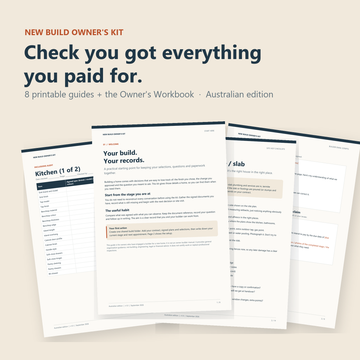
If you can, visit the site or ask for dated photos. The slab and frame stage guides cover what an owner can usefully check. Check whether any required inspections for that stage have been done, such as the frame inspection by your building surveyor or certifier, and ask for a copy of the inspection record (in Victoria, your builder must give you a copy of each building inspection outcome in writing). If you've engaged an independent building inspector, this is a good time for their stage inspection.
2. Are the variations on the claim ones you approved?
Check every variation included in the claim against your own variations list. Each one should be a variation you agreed to in writing, at the price you agreed, for work that has actually been done. Watch for duplicates, for items you discussed but never signed, and for variations billed before the work was done if your contract doesn't allow that.
3. Does the running total add up?
Keep a simple running total: contract price, plus approved variations, minus credits, minus everything you've already paid. The claim should fit inside that number. If the total claimed so far is running ahead of the work done, ask why.
Also check the maths on the invoice itself: stage percentage times contract price, GST treatment, and any adjustments for provisional sums or PC items.
4. Are there open defects from this stage?
If you found problems at this stage, check whether they've been fixed or at least acknowledged in writing. Raising defects in writing before you pay is far more effective than raising them after. Whether you can hold back part of a payment because of defects depends on your contract and your state's laws. Get advice from your state's building regulator, consumer affairs agency or a solicitor before withholding any payment.
5. Is the paperwork right?
- The claim is addressed to you and matches your contract details
- The stage and amount match your payment schedule
- Your lender has what it needs: many construction lenders need the builder's invoice and may send their own valuer or inspector to confirm the stage before releasing funds
- You know the payment due date, and it matches your contract
If something doesn't look right
Email your builder the same day with specific, polite questions: which stage item you think is incomplete, which variation you don't recognise, or which defect is still open. Ask for a written response and, if needed, supporting photos or documents.
Don't ignore the claim or simply refuse to pay without advice. Contracts usually set out a process for disputing a claim, and missing a payment can have consequences under your contract. If you can't resolve it with the builder, your state's building regulator or consumer affairs agency is the place to start.
Progress claim questions
My bank pays the builder directly. Do I still need to check claims?
Yes. Lenders usually check that a stage looks complete for their own lending purposes. They aren't checking that your variations are right, that your inclusions are correct, or that the workmanship is good. Your sign-off is often still needed before they release funds.
How long do I have to pay a progress claim?
Your contract sets this, and it's often a set number of days after the claim is issued. Check your payment clause so you know the deadline and can raise questions well before it.
Can I pay part of a claim?
That depends on your contract and your state's rules. If you believe part of a claim isn't payable, raise it in writing and get advice before paying less than the amount claimed.
Official sources
Rules differ between states and territories. These official pages explain the parts of this guide that depend on the law in each state; check the equivalent body where you build.
- Consumer Affairs Victoria: deposits and payments for building work: deposit caps, stage payment limits and variations (Victoria)
- Consumer Affairs Victoria: building progress: site access, inspection outcomes in writing and paying only for completed stages (Victoria)
- NSW Government: contracts for residential building work: progress payments must match the work carried out (NSW)